

On this page · 6
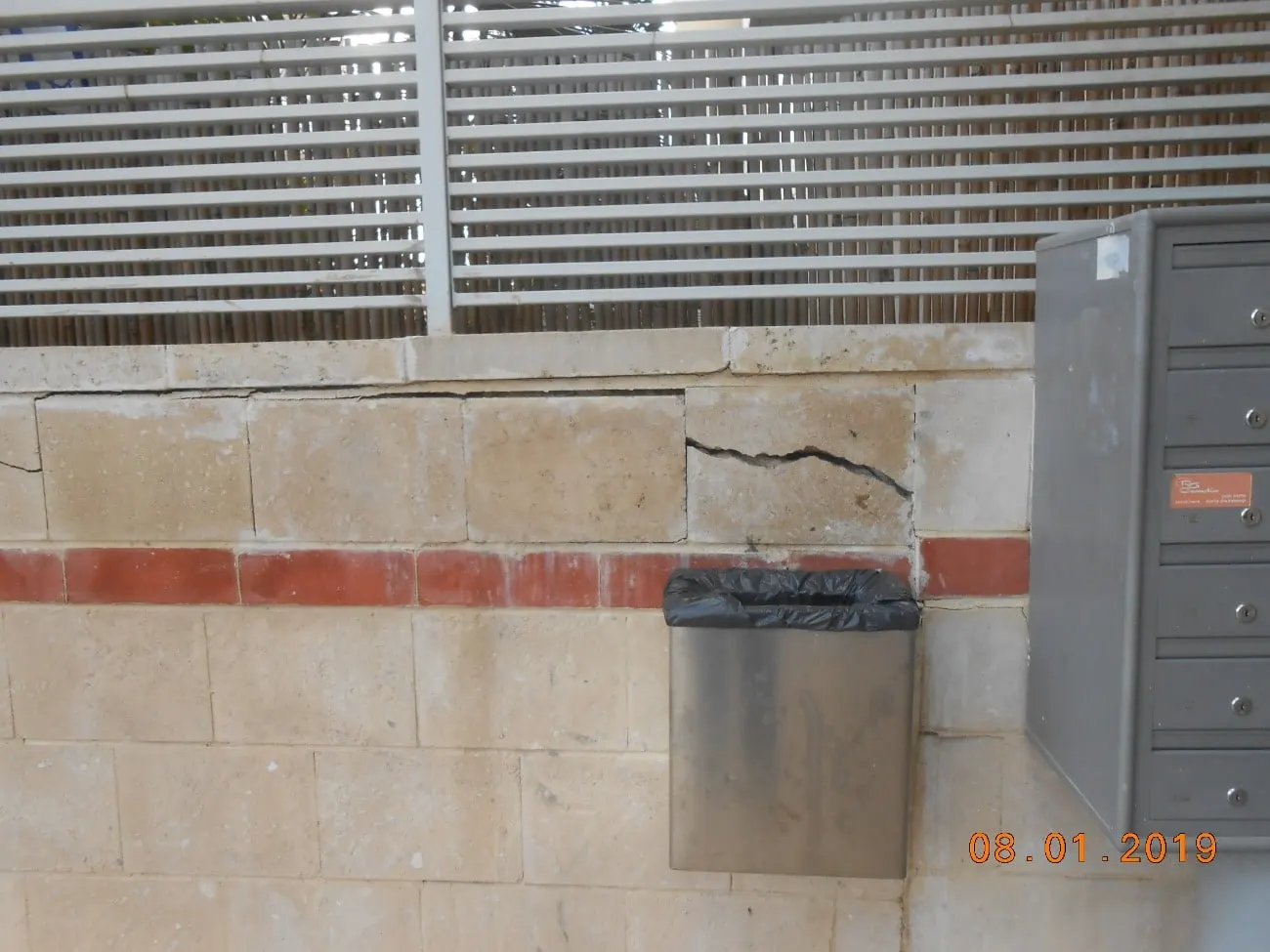
Cracks in the walls of a new home are, unfortunately, a recurring phenomenon. Arad Bedek Bayit specializes in cracks in apartments, and in most cases cracks, whether in an old apartment or in a new home, are a sign of further problems on the way. Even when thermal construction was promised, it is just as important to check for cracks in the walls of a new apartment as in an old one.
If you have found cracks in the walls of a new home, contact us soon. Bear in mind that cracks sometimes develop a little while after you move in, which can be problematic. It is important to locate cracks in order to save the heavy cost of repairing hazards and failures later on. Cracks in a new home have many possible causes, and a home inspection (bedek bayit) is the way to find their source. So what do you do about cracks in the walls of a new apartment?
Cracks in a new home: cause, urgency and the contractor's liability
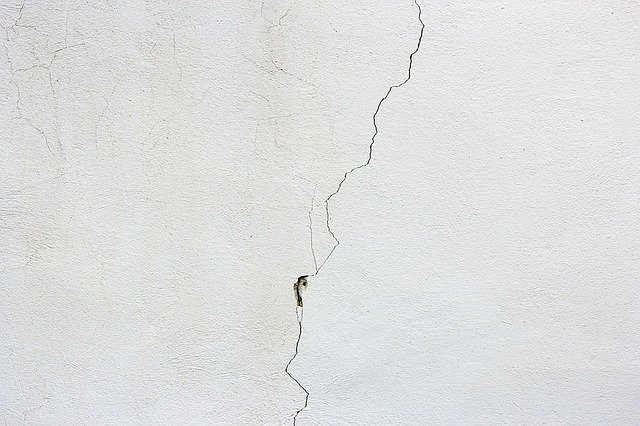
Cracks in the walls and ceilings of an apartment are among the most conspicuous construction defects. It takes no professional engineering knowledge or experience to notice a crack in a wall.
The big question is what caused the crack, how it should be treated and, above all, how urgent the treatment is. The range of possibilities is very wide: from plaster that was not applied correctly and therefore separates and cracks on the surface, to serious structural problems caused by differential settlement.
When cracks are found during a home inspection of an apartment bought from a contractor, check that the contractor's warranty period has not ended.
The period set by law for structural elements is eight years. In some cases it can extend beyond those eight years, which usually depends on whether the problem was discovered and reported within the eight years. Below we discuss several examples of different types of cracks in apartments and where they come from. Cracks are common in the walls of new homes and in old apartments alike. Why?
- Moisture and swelling of the ground
Swelling and changes beneath the building occur mainly when the moisture of the soil changes over the long term. Swelling appears chiefly on humid summer days and warm winter days, which cause moisture, as when dampness seeps in, to penetrate under the building and the foundations to expand into a dome shape.
As a result, exterior walls tend to bulge outward at the edge and cracks form in the apartments, especially around openings. Interior walls may develop cracks that start at the bottom of the wall, and the floor may lift.
To prevent this, the concrete floor is separated from the ground, for example with honeycomb elements. Tree roots are another cause of elements in a building being lifted.
The roots of trees and gardens around the building move the foundations and cause structural changes.
When trees are planted close to the building, the foundation soil expands as moisture is absorbed.
Plant only flowers or small trees at a distance of 2 meters from the building, and large trees at a distance of 10 meters from it.
2. The effects of the sun
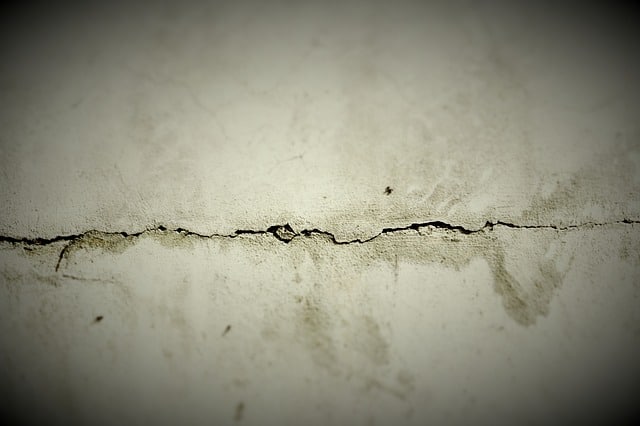
Cracks of various kinds may appear because parts of the building are exposed to the sun's radiation to different degrees. This mainly concerns the parts of the building that are exposed to the sun in the morning and at midday. The result can be a crack that is wider at the top and changes with the seasons.
3. Uneven foundations: diagonal cracks in the walls of a new apartment
New buildings sometimes show cracks in the apartments together with uneven movement along the length of the building. The cause is foundations that were not designed properly or, alternatively, were not built according to the plans.
In such cases one foundation settles more than another and "pulls" the building in one direction. These cracks are usually diagonal, and plaster repairs do not help. Repairing this serious defect requires strengthening the foundations or, alternatively, prestressing, both of which are very expensive.
4. The quality of the concrete
Some cracks in the walls of a new home appear in thick concrete and come from the drying and shrinkage that occur while the concrete sets. Other causes of cracks of this type can be differing foundations, and various movements and vibrations while the concrete is still "green".
5. Cracks between different elements
When two different elements are plastered, such as a block wall and the concrete column next to it, a reinforcing mesh has to be installed before the plaster is applied. The mesh can be made of jute fabric or of fiberglass.
It gives the plaster flexibility and so prevents it from cracking. Where this is not done, cracks appear between the elements because they expand at different rates. These cracks are mainly horizontal and vertical, and they appear between elements of different types.
6. Cracks between walls and ceilings
These cracks appear because walls and ceilings expand and contract at different rates. They are usually thin cracks of no significance apart from the aesthetic aspect, and they appear close to the joint between the ceiling and the wall. Cracks of this type are relatively easy to prevent, by cutting a groove in the plaster at the joint between the ceiling and the wall.
A professional engineering diagnosis of cracks is of great importance:
- Water penetrates through the cracks, with everything that follows from that.
- The cracks keep widening, make the building look worn and lower its value.
- With structural cracks, the cracks are only one of the symptoms, and the long-term danger may be fractures in the concrete,
severe water penetration and harm to the stability of the building.
An engineering diagnosis by a home inspection engineer will classify the construction defect that caused the crack, separate the cracks that are not significant, in a new home or an old one, from the cracks in the walls of a new or old apartment that are, and determine the proper way to treat them.
The engineers of Arad Bedek Bayit, led by building engineer Ron Arad, whom courts appoint as their own expert on construction defects. The company has been inspecting apartments and buildings since 2001. Engineer Ron Arad · More about the company