

The standard in numbers
- Railing and handrail height
- 105 cm
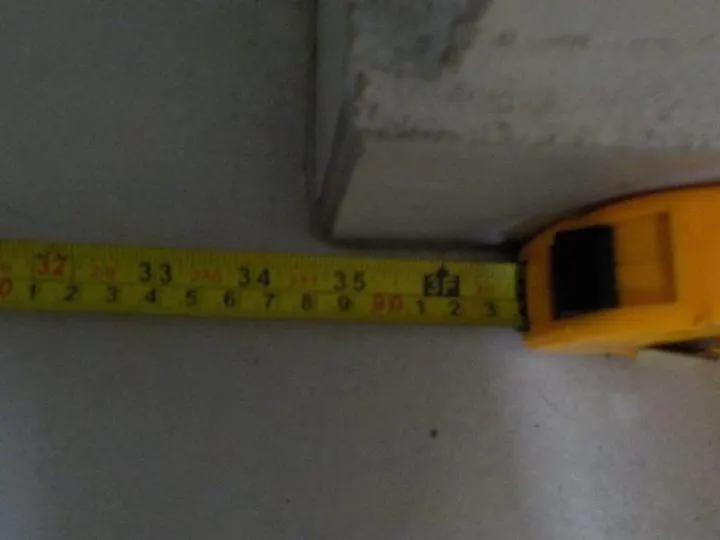
An engineer measures this during the inspection, against the standard. Every deviation goes into the report with a photo and a recommendation for repair.
On this page · 5
Stairs are part of every building, but they are also a significant safety hazard: an uncontrolled fall from height. To minimize the risks and make stairs safe to use, the Standards Institution of Israel has Israeli Standard (SI) 1142, which sets the requirements for railings and handrails.
This article looks in depth at the main points of SI 1142, Railings and Handrails, and at why it matters.
What is Standard 1142 of the Standards Institution of Israel?
SI 1142 is the Israeli standard for stairs that deals with the safety requirements for every type of railing and handrail on stairs. Its main purpose is to keep users safe and to prevent the accidents and injuries caused by falls in this area. The standard applies to a wide range of buildings, including homes, public buildings, offices and educational institutions.
What is a handrail and what is a railing?
A handrail (mis'ad) and a railing differ in their function, their position and their construction, although both are meant to provide support and safety.
Handrail (mis'ad)
- Function: helps people walk, mainly those who need extra support (the elderly, people with disabilities).
- Position: mounted on a wall or a vertical surface, beside stairs, in corridors, in toilet rooms.
- Construction: a single bar, straight or curved, fixed to the wall.
Railing
- Function: prevents falls from height (stairs, balconies, roofs).
- Position: at the edge of a raised surface, not necessarily on a wall.
- Construction: made up of several components (posts, balusters, horizontal bars and a top handrail).
In short, a handrail helps people walk safely and a railing prevents falls from height. A handrail is mounted on a wall; a railing not necessarily. A handrail is simpler in construction than a railing. A railing sometimes includes a handrail, but not every handrail is a railing.
Keep in mind that binding standards (such as the stair railing standard) govern their installation, to make sure they are safe and fit for their use and purpose.
What Standard 1142 requires of a railing
SI 1142 sets the requirements for designing, building and installing railings, so that users are safe. It covers a range of aspects of the railing, including:
- From what height is a railing required? Every flight of stairs with 3 steps or more must have a railing.
- Standard railing height: on the stair landing the railing must be at least 105 cm high. Along the sloping part of the stairs it must be at least 90 cm high. The height of a stair railing is measured from the point that can serve as a foothold to the top of the railing, even though in practice the railing is usually installed slightly above the ground.
- Strength and durability: the railing must be strong and stable enough to withstand various loads, chiefly a horizontal load of 100 kg per meter of length. It must be made of strong, durable materials such as steel, aluminum, glass or wood.
- Gaps: the gap between the railing's components (posts, balusters and the like), and between them and the building, must not exceed 10 cm, to prevent the danger of entrapment, mainly for children.
- Anchoring: the railing must be firmly anchored to the wall or the floor so that it cannot come loose. The anchoring must suit the type of structure and the materials it is built of.
- Design: the railing must be safe and comfortable to use, with no sharp corners, protrusions or dangerous edges.
- Handrail continuity: if the railing also serves as a handrail, it must run continuously along the whole staircase, including 30 cm beyond the top step and a continuation of the slope from the edge of the bottom step, so that users have continuous, safe support.
Note that the design and installation of a railing must be carried out by a qualified professional (a practical engineer (handasai), an engineer or an architect), who will ensure full compliance with the standard's requirements.
Why you need the current version of Standard 1142
As noted, SI 1142 exists to keep the public safe in all kinds of buildings. Standards are not static: they are updated from time to time in line with technological developments, new research and safety lessons.
Changes and updates to Standard 1142 may include, among other things, new requirements for raw materials, connection methods, load resistance, dimensions and heights, as well as provisions for special situations or specific types of buildings.
So in any new construction, or renovation of an existing building, you must make sure the work follows the latest version of Standard 1142. Working to an outdated standard can lead to non-compliance with the safety requirements and put lives at risk, and also to problems with the insurer if, heaven forbid, you ever need to claim. We recommend consulting qualified professionals to make sure the work is done to the most recent standard.
If you are interested, the updated standard can be purchased on the website of the Standards Institution of Israel.
Why compliant railings and handrails matter
Installing railings and handrails that meet the requirements of Standard 1142 is especially important. They significantly reduce the risk of accidents and injuries, and they ensure compliance with the building laws and the safety regulations.
Compliant railings and handrails also improve accessibility for people with disabilities, because they let everyone use the stairs safely, independently and with dignity.
Arad Bedek Bayit: preventing defects, inspection services and recommendations
A professional home inspection (bedek bayit) is an essential tool for anyone buying an apartment, new or resale. Arad Bedek Bayit, managed by engineer Ron Arad, provides comprehensive, professional inspection services to find construction defects and deviations from the standards.
The company's team of experienced engineers and lawyers, together with Ron Arad's extensive experience as a court-appointed expert, makes sure you get full value for your money and can exercise your legal rights. Call Arad Bedek Bayit today at 077-670-4444 and buy your apartment with peace of mind and confidence.
The engineers of Arad Bedek Bayit, led by building engineer Ron Arad, whom courts appoint as their own expert on construction defects. The company has been inspecting apartments and buildings since 2001. Engineer Ron Arad · More about the company