

The full guide
On this page · 3
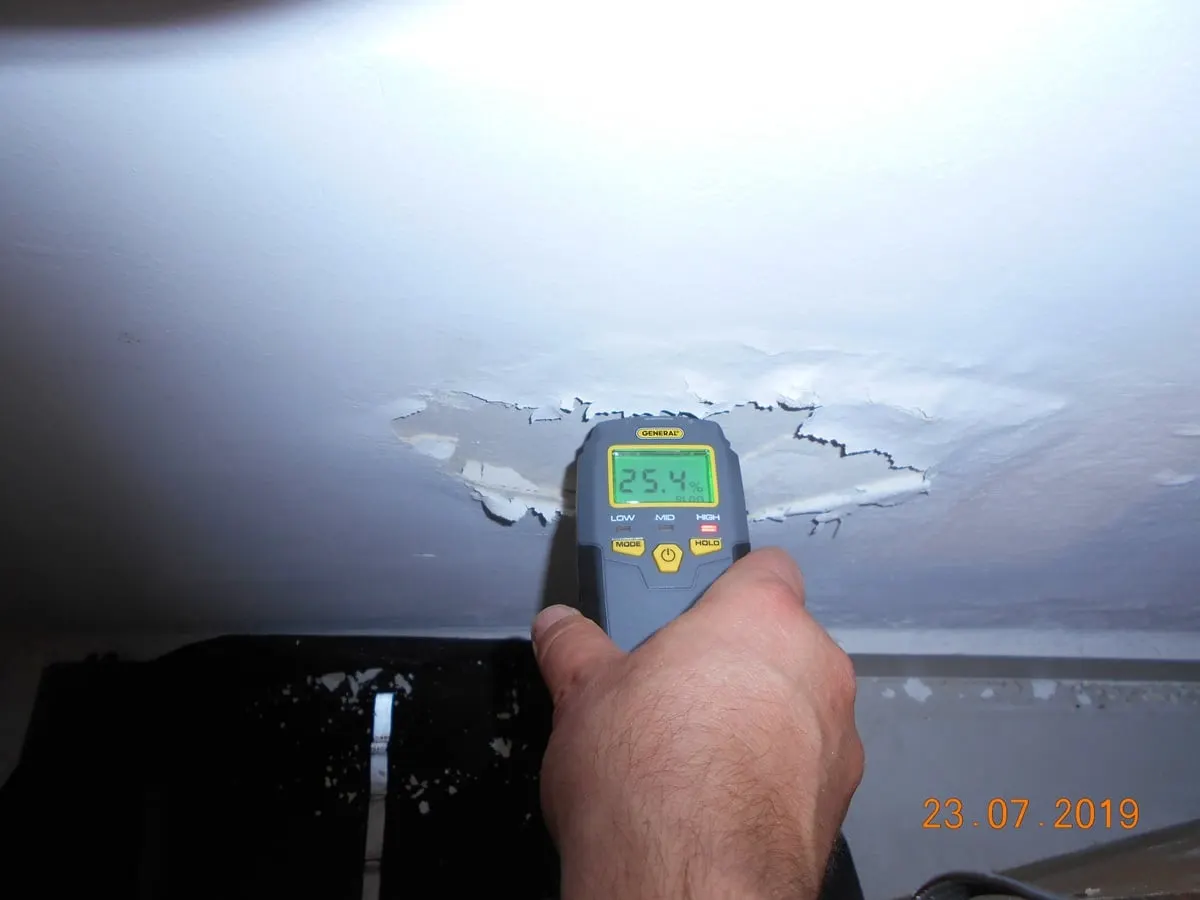
Dampness in an exterior wall of an apartment is a familiar sight: a dark stain suddenly appears on the wall, makes us uneasy, and our instinct is to pretend it is not there.
Sometimes we hope the summer will dry it out, sometimes we paint over it or hang a picture in front of it. But the source has to be tracked down, because dampness does not go away.
On the contrary, it announces a bigger stain, mold, blistering and peeling plaster and, of course, water seeping into places where it is not wanted.
Before an exterior wall in an apartment building can be waterproofed, the dampness in it has to be located and a report on the failure issued to the seller of the property. The test is done as part of a home inspection (bedek bayit), which covers the building systems, compliance with building standards and, in particular, dampness in exterior and interior walls, with a wall dampness expert.
What do you do about dampness in the exterior wall of a building, or dampness in general in a new apartment from a contractor? How does a home inspection deal with dampness in such an apartment? What about the handover protocol: is dampness in the exterior walls of a new apartment looked for?
And how are exterior walls tested for dampness? These and other questions are answered in this article and on the rest of the site.
Why it pays to have an expert diagnose the source of the dampness
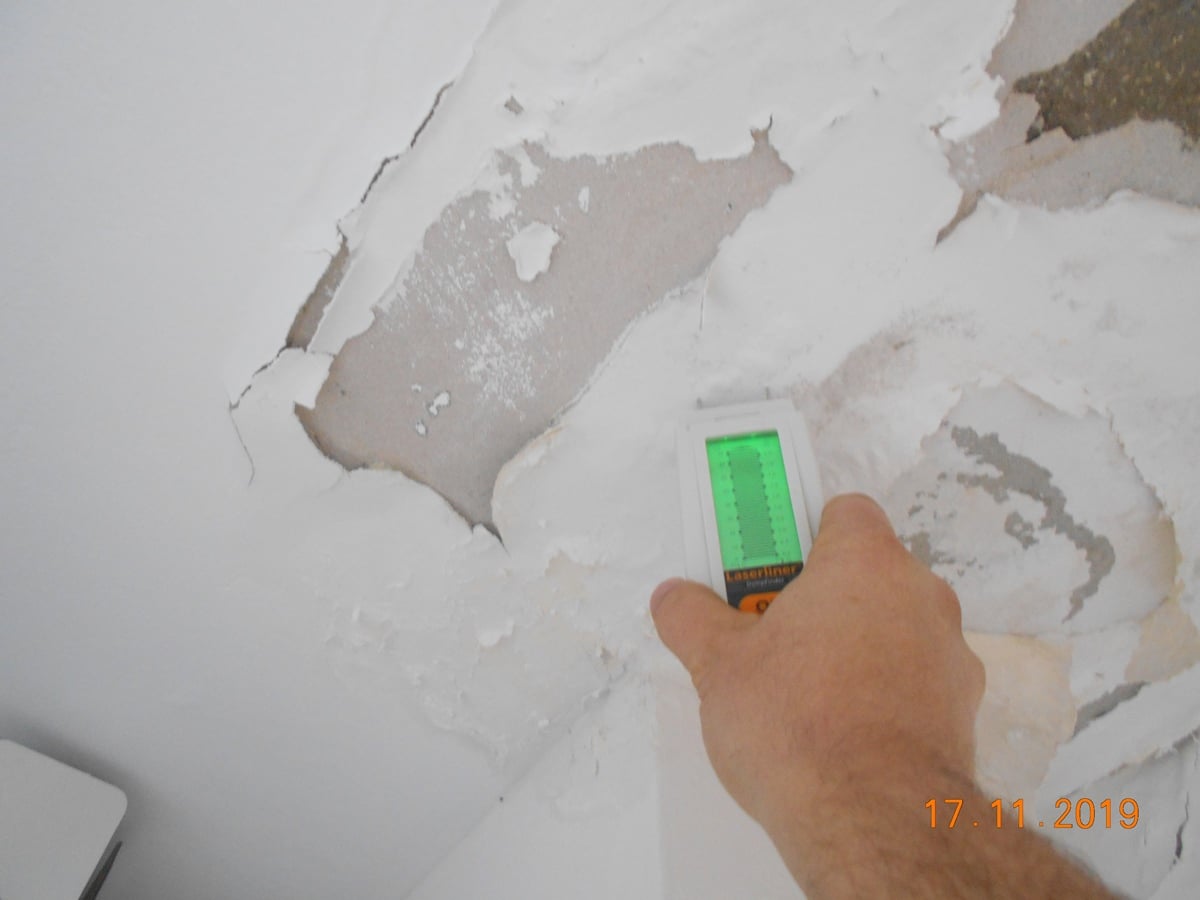
Wet walls usually point to a defect in the apartment or in the building, and a defect does not go away by itself! It is worth stopping the damage before it develops, and sparing yourself repeated paint and plaster repairs or even worse dampness damage.
A construction defects engineer who specializes in home inspections will tell you where the dampness comes from, so that the problem can be treated at its source and does not come back.
When the exterior wall of an apartment building is not waterproofed, the dampness in it has to be tracked down, and unfortunately the test usually reveals failures. Having the exterior walls tested by a wall dampness expert is a must before you buy a property.
Who is responsible: waterproofing an exterior wall in an apartment building
With the expert opinion of a construction defects engineer in hand, you can go to the building committee (va'ad bayit) and ask it to make the repair or to pay for it, because the exterior wall counts as common property.
If the source of the dampness is in dispute, the expert opinion of a waterproofing and leak expert helps settle arguments and uncertainty about whose responsibility it is to deal with the construction defect.
Even if the problem is clearly yours, calling in a construction defects engineer gives you a professional diagnosis. It lets you deal with the root of the problem in real time and not only with the symptoms.
In other words, it saves you from breaking up floors for nothing, or from repairing in the wrong places and seeing the problems return.
Why an exterior wall gets wet: the range of causes
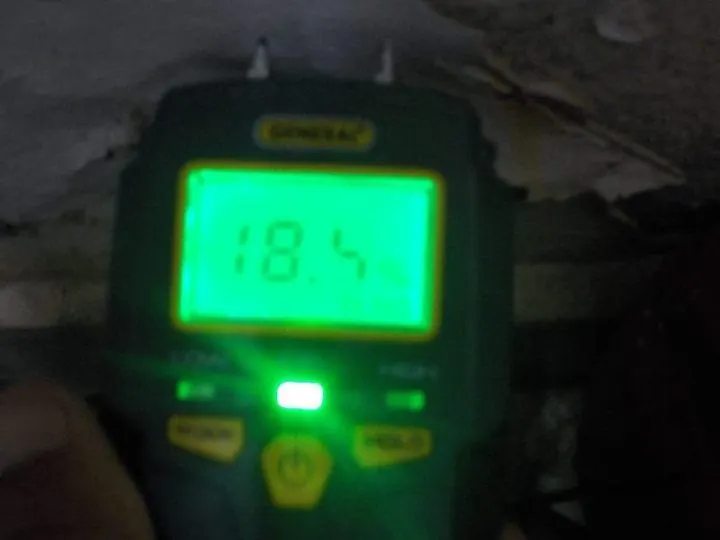
Even if the source of the dampness seems obvious to you, what has surfaced may be only the product of a different defect. In an apartment building, signs of dampness in exterior walls may point to faulty waterproofing of the building's exterior cladding, but also to a worn-out pipe, a gutter, or leaks that seeped in from somewhere else, for example from faulty waterproofing of the roof. Related: inspecting a resale apartment.
In an apartment that has, say, a tiled balcony above it, the dampness may come from faulty waterproofing of the tiled area or of the balcony walls. Other causes of damp exterior walls: poor sealing where outside meets inside, at balconies for example; careless plastering between the wall and the ground; cracks that formed over time because the building's foundations settled unevenly; and faulty cladding in tile, plaster, ceramic, stone and more.
Exterior dampness also shows up under windows. If signs of dampness appear next to or under a window in the rainy season, first check whether the window itself is properly built and sealed against rain.
Old windows that do not close tightly and let water in should of course be replaced immediately. If the window is sound, check the shutter box above it, which is usually where the problem starts. Damp exterior walls can also appear in houses with roofs, for several reasons, such as:
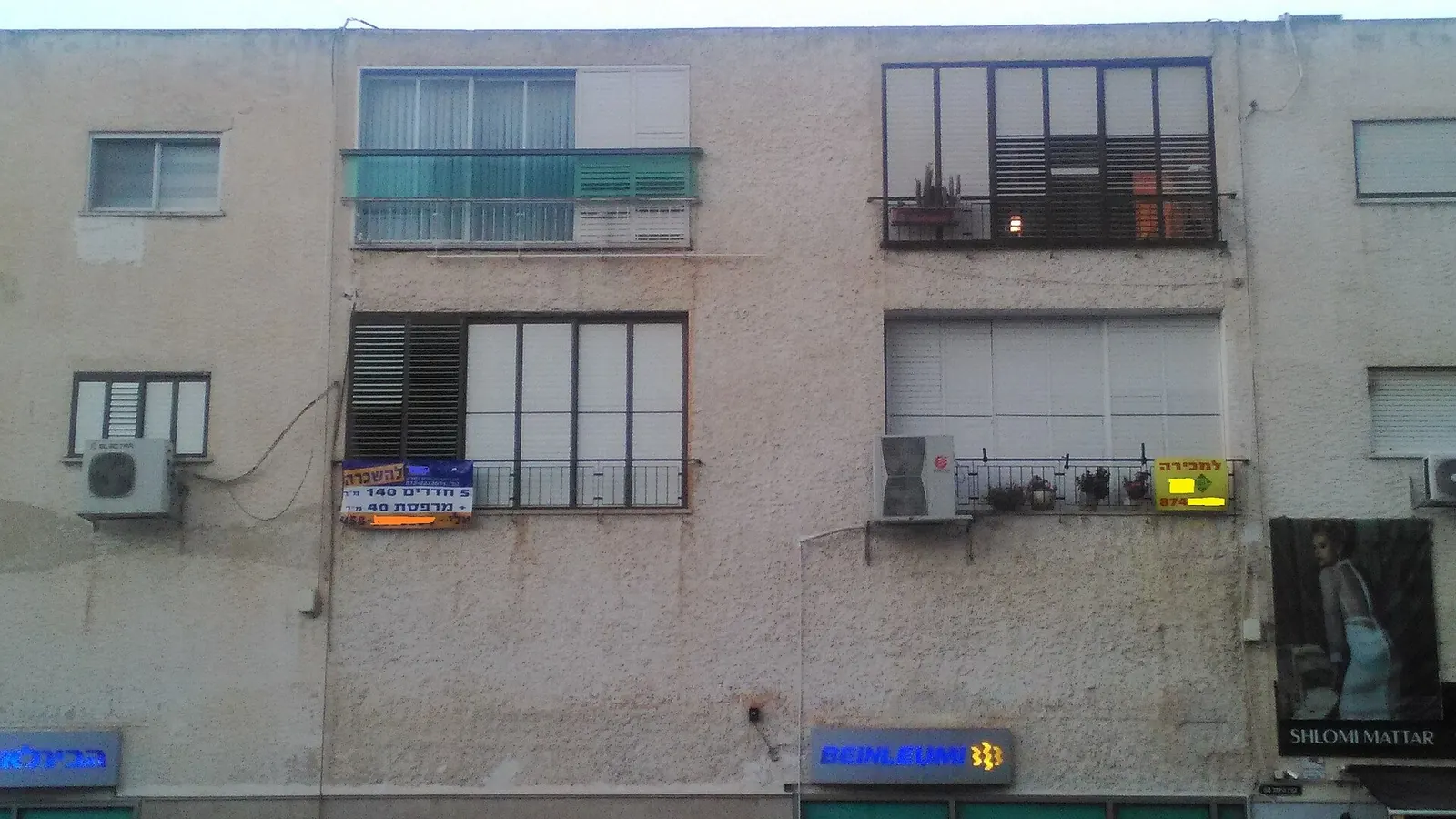
A burst water pipe on the floor above, which causes heavy water absorption that can lead to algae, severe peeling and fungus; incorrect waterproofing of the roof; incorrect roof drains that create slopes which concentrate the water at one point, so that dampness builds up in part of an exterior wall. Dampness can definitely endanger the building in which it appears and, of course, the residents around it.
When dampness in the exterior wall of an apartment building is not tracked down, it can do great harm to the wall itself and to the building as a whole: it weakens the durability of the building and the wall, causes peeling and cracks, and badly spoils the look of the room.
Today a dampness test can be done simply and efficiently with a wide range of advanced technologies that leave the surfaces clean and intact and require no demolition at all of walls, pipes or the home's systems.
Among the newest and most professional methods for testing dampness, or waterproofing and pipe problems, are various thermal scans made with infrared imaging.
This test makes it easy to find the source of the dampness through color images that show the problem areas precisely, much like the scans done in hospitals. As a result, wall dampness can now be treated at the exact spot, which largely avoids destroying the whole wall.
In addition, special optical fibers can now be inserted into interior walls or pipes to detect and locate dampness and leaks. Here too the advantages are significant: no walls or floors have to be broken.