

The basement seems like the strongest, most protected part of the house. But what about radon gas testing there? Awareness of the issue has grown in recent years, but it still deserves attention when you decide to buy a house. Take it into account when you have a building inspection done.
What is radon gas, and why is it dangerous?
Radon is a natural, noble gas: odorless, colorless and radioactive. It originates in the ground. High concentrations are dangerous, since prolonged exposure can cause lung cancer. The gas also penetrates buildings easily through cracks or plumbing.
It forms from the decay of radioactive elements present in varying concentrations in rock and soil. Outdoors, the concentration is low and disperses into the air; the problem is when it builds up indoors, mainly in the basement, safe room (mamad) or shelter of a ground-floor or garden-level home. The diagram below shows how radon spreads from beneath the ground.
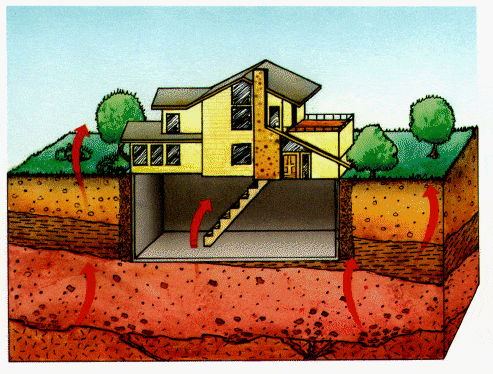
Radon comes from the building materials themselves: the poured concrete of apartments, basements and shelters is where most of it concentrates. A safe room (mamad) wall is twice as thick as a regular wall, so it produces twice the decay, which is why shelters and safe rooms tend to show the highest concentrations.
What are the standards for radon gas testing?
The standard short-term test for radon concentrations as part of a home inspection (bedek bayit) takes several days and must be carried out in closed rooms, per Israeli Standard 4175 of the Standards Institution.
For safe rooms, the Ministry of Environmental Protection recommends a longer building inspection test to determine radon concentrations.
This test runs under normal living conditions, in a ventilated room, for three to six months, in accordance with Israeli Standard 5714. Advanced equipment can also be used during a home inspection to run preliminary tests for radon in residential apartments.
Either way, radon testing in basements should be carried out by a home inspection company as part of a building inspection, measuring the gas level accurately against the standards.
So what can you do as part of a home inspection that includes radiation testing?
Be aware that radon may be present, before a purchase or after it, when a home inspection engineer carries out the inspection. Awareness alone is a step in the right direction. Have a building inspection done before or after the purchase, and periodically in a home you have already lived in for years, including on upper floors.
Ventilate safe rooms (also on upper floors), basements and shelters. If there is no window, use mechanical means. Be especially careful about this in winter. Do not skip measurement on the ground floor of residential apartments, especially if the building's floor is in contact with the ground.
Pay special attention to radon testing in ground-floor buildings, basements, shelters or safe rooms used by babies or children, such as daycares and kindergartens. For any concern or doubt, consult a building inspection expert, and do not take unnecessary risks.
The engineers of Arad Bedek Bayit, led by building engineer Ron Arad, whom courts appoint as their own expert on construction defects. The company has been inspecting apartments and buildings since 2001. Engineer Ron Arad · More about the company