

On this page · 6
If you love surprises, but not when it comes to the floor of your home, this article is for you.
Porcelain tile or ceramic, imported or locally made, trendy versus practical: how do you choose the right flooring?
In this article, we bring you professional tips from Ron Arad, building inspection engineer, on how to choose flooring, what the standard is, and what to pay attention to when your apartment is being tiled.
Tile size
Before getting excited about 80 x 80 cm tiles and their elegant look, think twice: tiles of this size need to be perfectly sized and require a level of laying work that is close to perfect, two things that are both rare, or the result will be disappointing.
It is difficult to lay a floor with large tiles and overcome the variation between the size of one tile and the next.
A good tiler knows how to work around that variation with a slight shift when installing each tile.
That is one of the purposes of the grout joints between the tiles: to allow for slight variations.
With tiles up to 40 cm this is easy to do, but with larger tiles the room to maneuver keeps shrinking.
The result can be height differences between tiles and uneven grout joints.
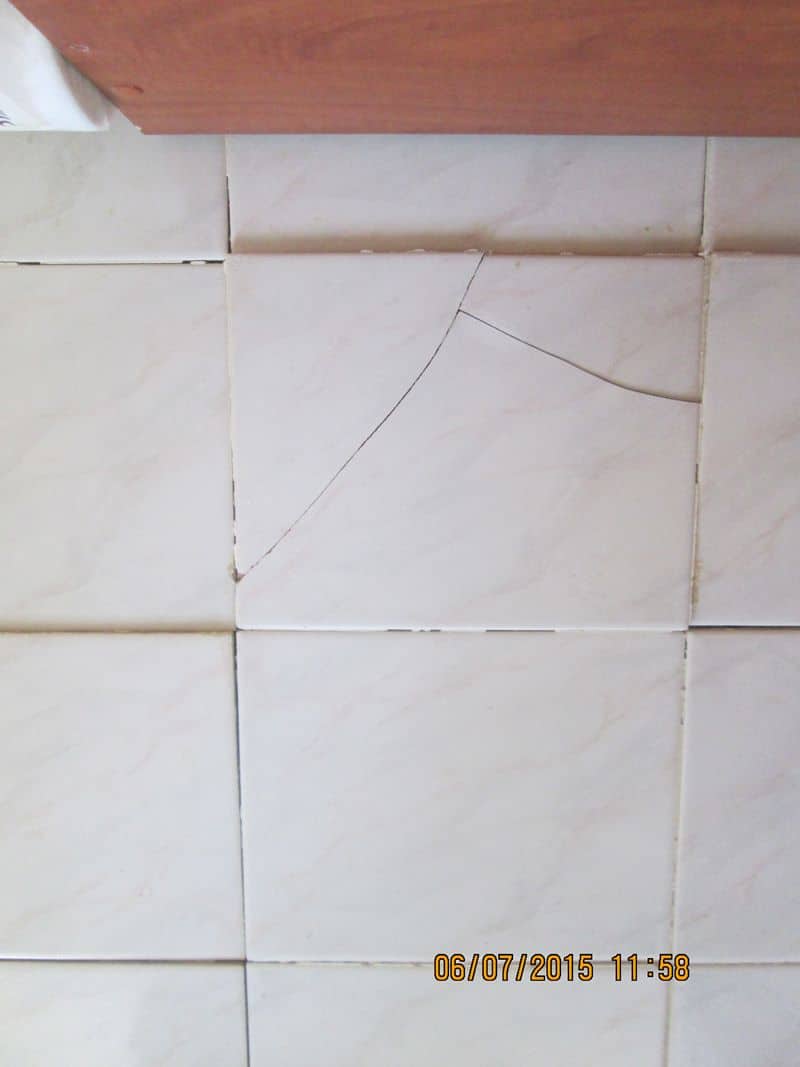
Spare tiles: how many do you need?
Whether you buy the flooring yourself or it comes from the contractor, you need spare tiles worth at least 2% of the floor area: that is the bare minimum. For example, if you tiled 100 square meters, you should have a surplus of at least 2 square meters of spare tiles, and the same goes for every type of covering: different kinds of flooring, wall cladding, floor skirting boards and so on.
The contractor is legally obligated to supply you with this quantity, but many are not well prepared for it and run short of tiles for every resident. Treat this as grounds for a claim against the contractor: it will be very painful for your wallet if, five years down the line, once the contractor no longer carries any warranty for cracks or plumbing repairs, you have to replace an entire floor just because you have no matching tiles to patch a single spot.
Shade differences between tiles
Some people like the pattern created by tiles with non-uniform, varying shades, while others are seriously disappointed and see it as a flaw in the flooring, as the lawsuits in this field attest.
Either way, it is worth knowing what you are ordering, to spare yourself the distress.
Do not rely on appearances alone. At a shop, or at the contractor's, you typically see a single tile, or at most a square meter of the surface, which does not show you the result you will get across a whole floor.
So if you are not told explicitly, ask whether the flooring model in question can have shade differences.
It is permitted, and even advisable, to inspect the flooring before it is actually laid in your apartment, even in a new apartment from a contractor; some contractors will even invite you to do this on their own initiative.
Tell the contractor you want to be there when the flooring for your apartment arrives, before it is laid. To avoid a situation where they forget to tell you, which happens, it is worth visiting the site regularly and following up. On the day the flooring arrives, spread the tiles out, say in the living room, and check how it looks; if you have specific requests about arranging a particular pattern, be there to instruct the tiler directly.
Tiles that are too sensitive
When choosing wood parquet or laminate flooring, you know in advance that along with the beauty comes somewhat restrictive maintenance, but what about tiles?
One of the reasons people prefer tiles is their practicality, but do not treat that as a blanket rule.
Some tiles come with manufacturer cleaning instructions that require you to avoid certain ingredients found in standard cleaning products.
Just as you expect an everyday piece of clothing to have reasonable care instructions rather than needing dry cleaning after every wear, check the manufacturer's cleaning instructions to make sure there are no unreasonable restrictions on how you can clean the tiles you chose.
Some tiles, for instance, explicitly state not to clean them with surfactants or other specific ingredients. That restriction can mean buying relatively expensive cleaning products for years, or ending up with stains.
If your cleaner accidentally uses an untested product, or tenants change in a rental and nobody mentions the restriction, stains will appear on the floor.
Ask to see the manufacturer's instructions before you buy.
Tips for choosing flooring: general
A few basic pieces of advice worth taking into account when choosing flooring.
For convenience, it is better to choose a tile color and texture that does not show dirt easily. Step outside the charm of the beautifully designed showrooms for a moment and think about your everyday life and habits, and choose accordingly.
Another tip is to check how rough or smooth the tiles are. A smooth marble look conveys luxury, but if you have children or elderly people at home, keep in mind that a smooth surface invites slips.
The main difference between porcelain tile and ceramic tile is thickness and strength. Porcelain is considered the higher-quality flooring tile, more resistant to cracks and breakage.
Broken tiles and the handover protocol
And let's finish with a small tip for anyone buying a new apartment from a contractor that includes flooring.
At the first protocol meeting, the contractor usually invites you to inspect the apartment for defects.
This is a stage where it is highly recommended to bring in an expert building inspection engineer, since a reasonable person cannot identify most construction defects on their own: they do not know the standard, and cannot measure against it.
Either way, make sure the contractor presents the apartment to you clean; most self-respecting contractors will clean it themselves, even without being asked. When the flooring is dirty, it is impossible to identify many construction defects, including paint flaws or cracks in the flooring.
If the apartment is presented to you when it is not sufficiently clean, write explicitly on the handover protocol that the apartment was shown in an unclean condition, so construction defects could not be identified.
The engineers of Arad Bedek Bayit, led by building engineer Ron Arad, whom courts appoint as their own expert on construction defects. The company has been inspecting apartments and buildings since 2001. Engineer Ron Arad · More about the company